




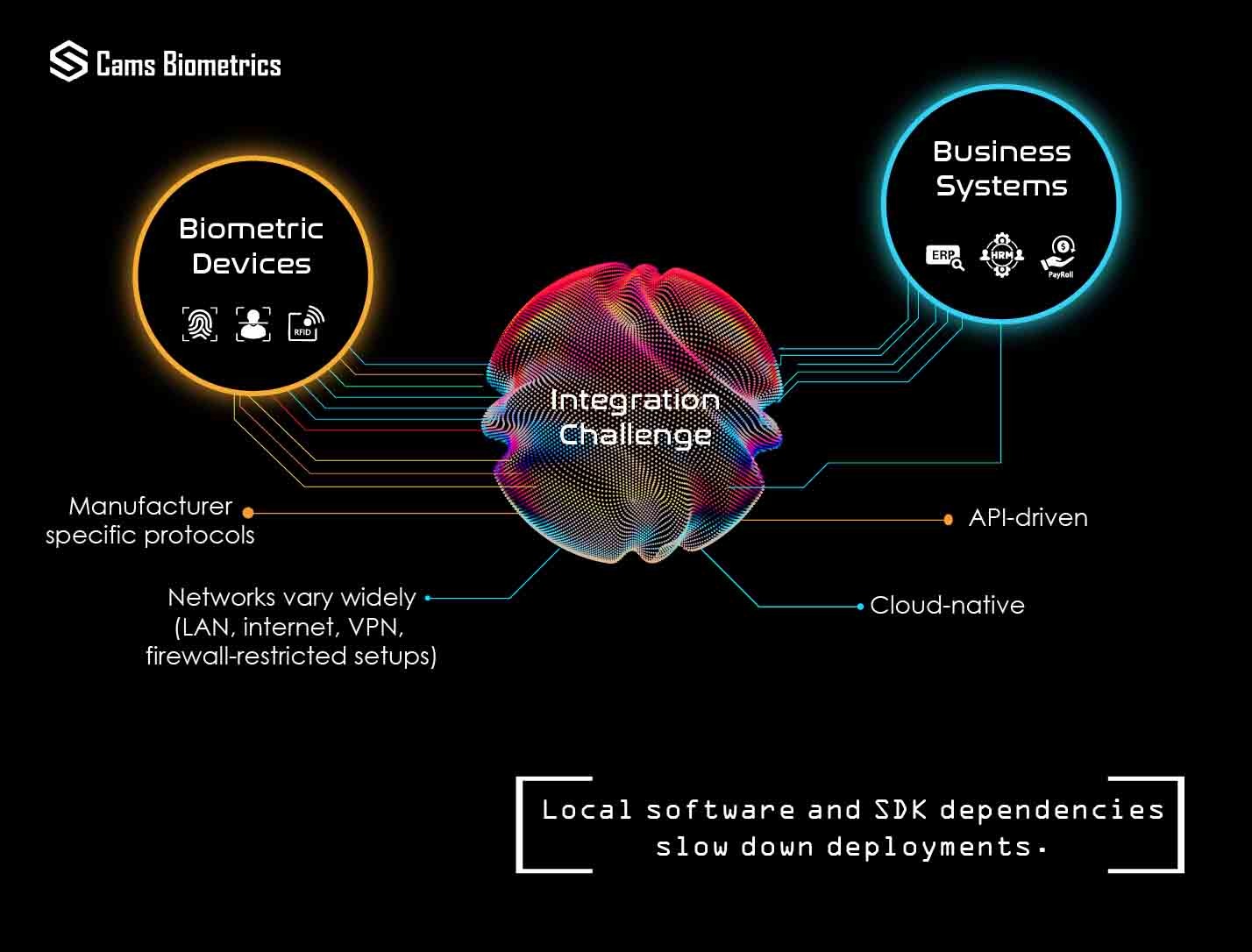
Biometric technology is everywhere today, from fingerprint scanners at office entrances to face recognition in enterprise HR systems. But if you think choosing the right device is the toughest part, think again. In most cases, the real challenge is integrating biometric systems with your existing business infrastructure.
Why Biometric Integration Is More Complex Than You Think?
Organizations often invest heavily in biometric hardware, only to find that connecting these devices to payroll, HR, or enterprise platforms is where the complexity truly lies. There are three main reasons for this:
1. Manufacturer-Specific Protocols
Each biometric device comes with its own proprietary communication standards. Whether it’s fingerprint scanners, iris recognition, or face ID systems, different vendors use different protocols, making cross-device integration a challenge.
2. Modern Business Systems Expect APIs
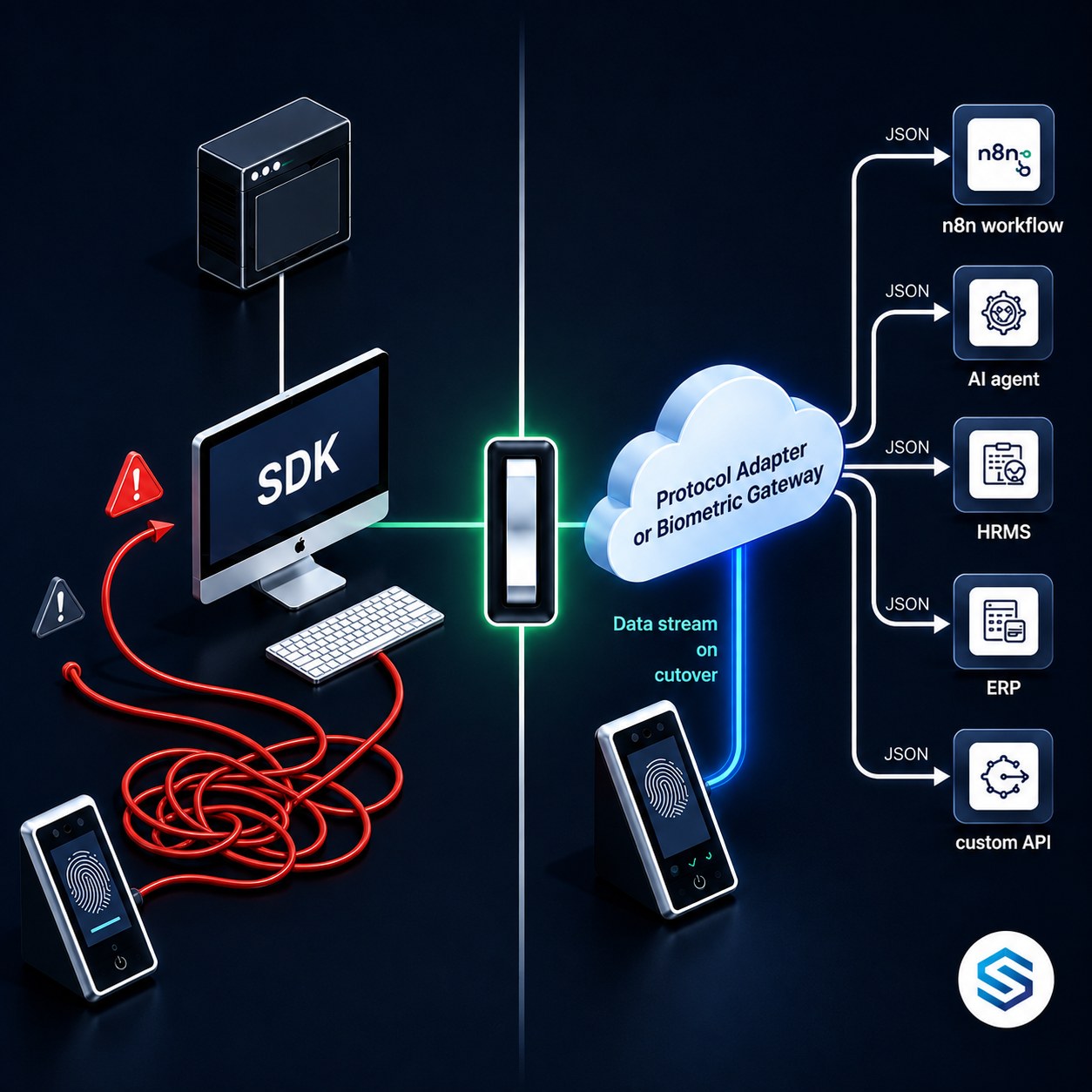
Most HRMS, ERP, and payroll systems today rely on standardized API-driven communication and cloud-based architectures. Traditional biometric devices, however, weren’t built to directly speak these languages. This mismatch often leads to time-consuming custom development.
3. Diverse Network Environments
Network setups- ranging from LAN and VPNs to firewall-restricted internet environments, introduce additional hurdles. Ensuring secure, reliable connectivity between biometric devices and business systems adds another layer of complexity.
When you combine these factors, integration delays and increased costs are almost inevitable, unless you adopt a smarter approach.
Gateway-Based Biometric Systems: A Modern Solution
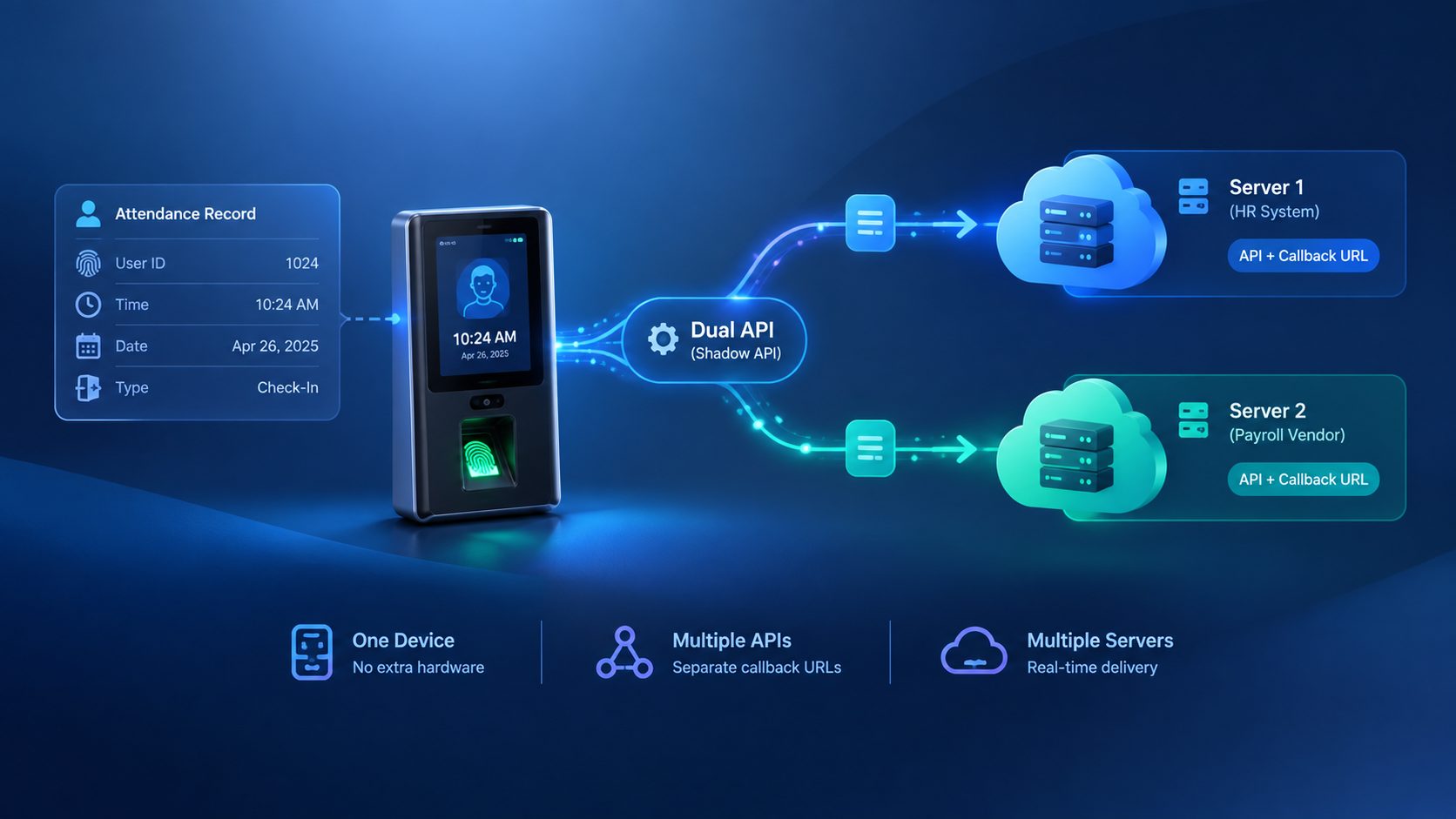
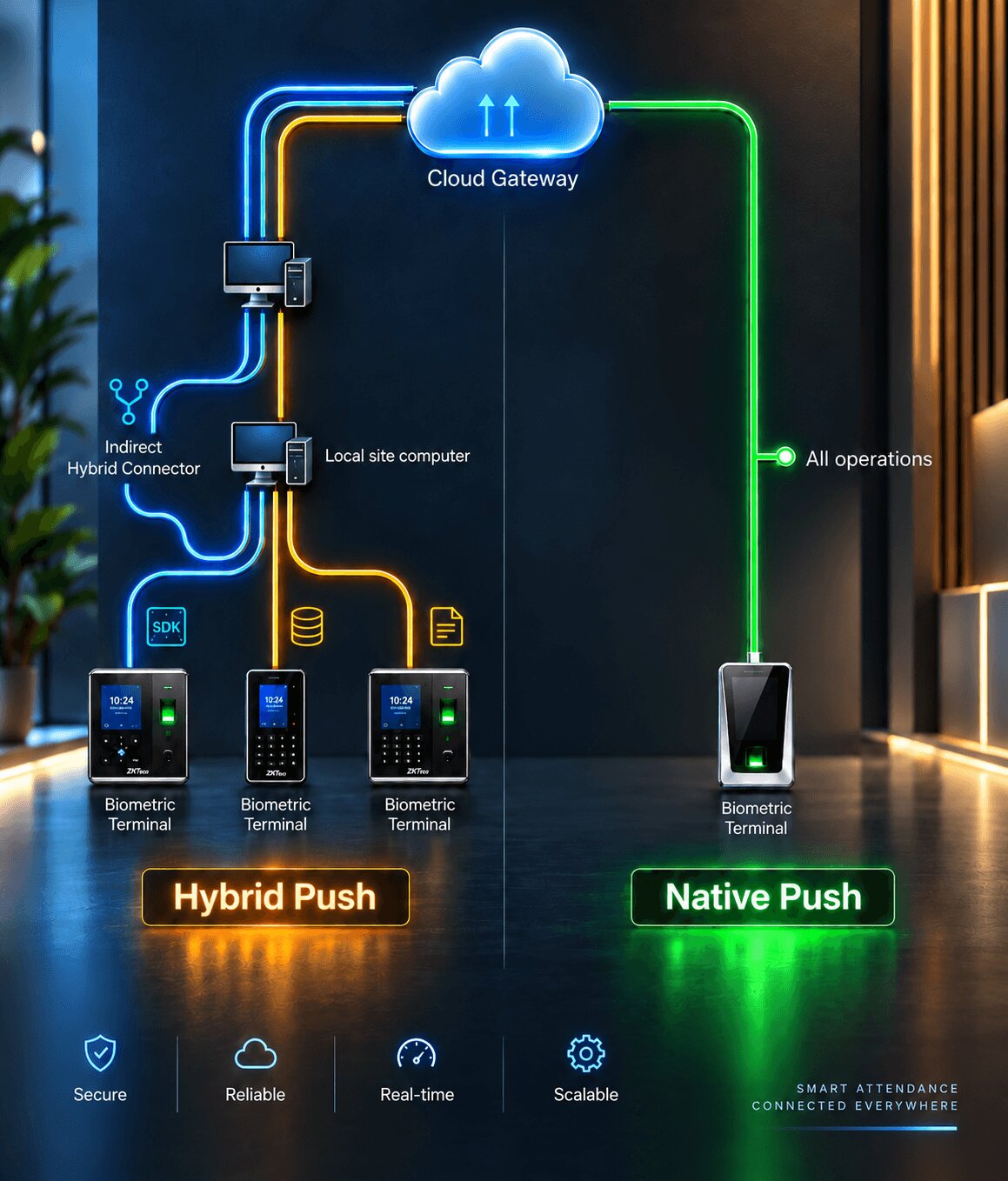
The solution lies in gateway-based biometric architecture. Think of it as a universal translator that connects your biometric devices with your business systems seamlessly.
How Gateway Architecture Works
- Devices act as data sources: Fingerprint scanners, face recognition cameras, and other devices focus on capturing and validating identity data.
- Business systems consume data via APIs: ERP, HRMS, and payroll platforms interact with biometric data through standardized API calls.
- The centralized gateway manages complexity: The gateway handles differences in protocols, network setups, and data normalization, simplifying integration.
Learning from Other Industries
This approach mirrors how payment gateways and messaging systems operate. Instead of connecting each payment processor to every e-commerce platform individually, a centralized gateway standardizes communication, making integration faster and more reliable.
Benefits of API-Driven Biometric Integration
Adopting API-driven, gateway-based biometric solutions offers multiple advantages:
- Vendor flexibility: Swap or add devices without rewriting your integrations.
- Faster deployment: Pre-built API connections reduce development time.
- Simplified maintenance: Updates happen at the gateway rather than at each integration point.
- Scalable solutions: Easily add new devices or locations with standardized protocols.
- Future-proof architecture: Adapt to new biometric technologies without overhauling the entire system.
Why Integration Matters More Than Devices?
As biometric technology evolves, organizations must shift focus from hardware to integration architecture. A gateway-based, API-driven approach ensures your biometric investment delivers long-term value, scales efficiently, and remains adaptable to future innovations.
By prioritizing integration over devices, you’re not just adopting modern technology, you’re building a resilient, future-ready biometric ecosystem that works seamlessly with your business operations.
Conclusion: Prioritize Integration for Lasting Biometric Success!
The future of biometric technology isn’t just about having the latest devices, it’s about how well these systems integrate with your business operations. Focusing on gateway-based, API-driven integration ensures that your biometric investment is flexible, scalable, and future-proof.
By adopting this approach, organizations can:
- Seamlessly connect multiple devices to HR, payroll, and ERP systems
- Reduce deployment time and maintenance overhead
- Easily scale across locations or add new devices
- Adapt to emerging biometric technologies without costly overhauls
In short, integration matters more than hardware. A well-designed gateway-based architecture transforms biometric systems from standalone devices into a cohesive, efficient, and resilient part of your business ecosystem, delivering value today and tomorrow.